
"fruit pulp"
4000 article(s) found

Introduction to the steps of semi-washing suntan honey in the treatment of coffee and raw beans
The steps of semi-washed suntan honey for the treatment of raw coffee beans are both coffee-producing countries. South American countries must be the same in the coffee industry and follow the pace of Brazil, the coffee big brother. At the beginning of the birth of pulp solarization, its ideas and even specific operations have also circulated to other coffee-producing countries with exchanges, among which the interpretation of pulp solarization is the most unique and perfect.

What difference does wet planing honey have to go to flesh insolation? What's the way to treat coffee?
Yesterday we talked about sun treatment and water washing. Today we will take a look at the treatments between sun treatment and water washing: wet shaving, half-sun treatment, pulp sun treatment and honey treatment. What are these treatments? What's the difference between them? Let's first look at the structure of coffee cherries. A coffee fruit is large from the outside to the inside.

The degree of retention of pectin pulp during honey treatment determines honey treatment, graded honey treatment and solarization.
Professional coffee knowledge exchange more coffee bean information Please follow the coffee workshop (Wechat official account cafe_style) the pulp treatment refers to what honey treatment has changed the raw bean treatment which step coffee is a kind of agricultural products, fresh is one of the indispensable elements of good coffee. When buying coffee beans, you will often see Washed and Natural.

[sun, water washing, honey treatment] effects of different coffee bean treatments on coffee flavor
Professional coffee knowledge exchange more information about coffee beans Please pay attention to the coffee workshop (Wechat official account cafe_style) coffee beans are not born dark brown beans. Coffee fruit is shaped like a red cherry fruit, each fruit has two coffee beans, the coffee fruit, coffee beans after processing, will be what we usually see. The production of a cup of coffee includes harvesting and processing.

Introduction to the treatment of Coffee Soybean Honey introduction of three major treatment methods of coffee beans
We know that the three treatment methods of raw coffee beans can be divided into three types. The distinction between each method is based on the fact that several layers of matter are removed from the fruit before the coffee is dried. The following is a list of the three major processing methods: 1. Natural sun treatment: retain all substances 2. Honey treatment: remove the peel and pulp and retain part or all of the mucous membrane (honey) 3. Washing method
Coffee refining-a common method for the treatment of fine coffee beans
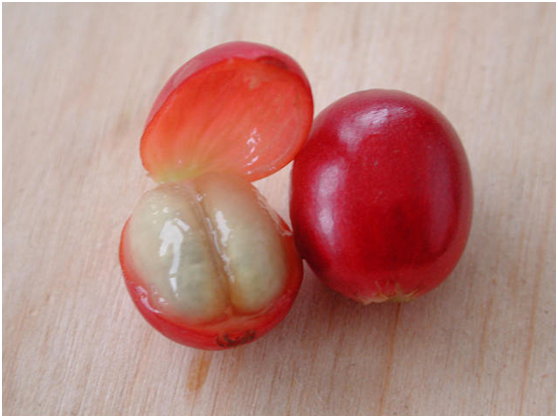
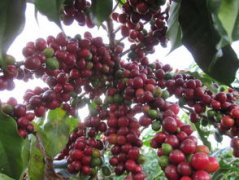
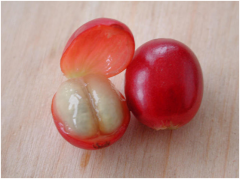
[introduction] there are a pair of oval seeds in the center of the fruit of the coffee tree, which are covered with exocarp, endocarp and pulp. Ripe fruit will rot in a short period of time without treatment, so the purpose of refining is to enable coffee beans to be preserved for a long time, easy to store and circulate. Figure (1) Coffee tree has a pair of oval seeds in the center of the fruit, which are covered by exocarp, endocarp and pulp.

Treatment of Coffee fruits-- washing
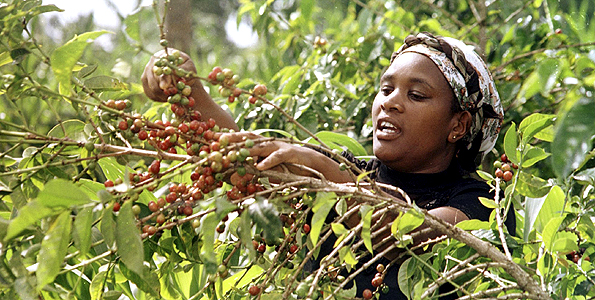
When the coffee fruit is harvested from the mountain, the next step is to remove the peel and pulp of the coffee beans. There are two main ways of treatment: washing and solarization. But the ultimate determining factor is whether there is enough water to use. Some special boutique coffees are both insolated and washed.
Coffee from fruit to raw bean dry washing semi-washing refined Colombian coffee beans
Coffee changes from fruit to raw bean there is a pair of oval seeds in the middle of the fruit, which are covered with outer skin, inner pulp and pulp. Ripe fruit spoils in a short time without treatment. Refining is to remove the skin and pulp of the coffee fruit, and then take out the seeds. Generally speaking, about 1 kg of raw coffee beans can be obtained from 5 kg of coffee fruit. The refining methods include drying and washing.

Coffee knowledge: introduction to the anatomy of coffee fruit and the grade of honey treatment
1. Coffee fruit anatomy map Coffee fruit is divided into five layers, as shown in the figure: these five layers are: 1. Skin/Pulp: the outermost layer of coffee beans is covered with berry-like skin and pulp. In addition to the natural sun method, coffee beans treated by other methods must remove the skin and flesh within a few hours after picking. Similar to it is the cherry we often eat, but different

The production and processing of coffee beans the Panamanian Jade Manor
1. Skin/Pulp: the outermost layer of coffee beans is covered with berry-like skin and pulp. In addition to the natural sun method, coffee beans treated by other methods must remove the skin and flesh within a few hours after picking. Similar to the cherries we often eat, the difference is that when we eat cherries, we mainly eat the pulp and peel of berries. For coffee.
The evolution of coffee from fruit to raw beans to understand the change process of coffee beans
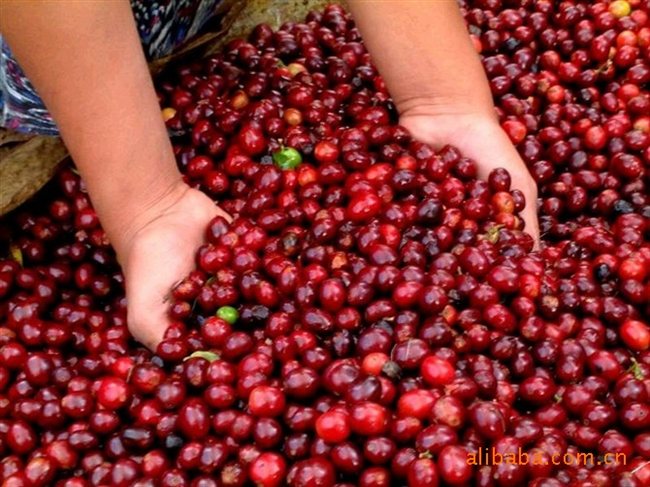
In the middle of the fruit of coffee is a pair of oval seeds, which are covered with outer skin, inner pulp and pulp. Ripe fruit spoils in a short time without treatment. Refining is to remove the skin and pulp of the coffee fruit, and then take out the seeds. Generally speaking, about 1 kg of raw coffee beans can be obtained from 5 kg of coffee fruit. The refining methods include drying type, washing type, and compromise between the two.
Processing methods of high-quality coffee beans
There are a pair of oval seeds in the center of the fruit of the coffee tree, which are covered with exocarp, endocarp and pulp. Ripe fruit will rot in a short period of time without treatment, so the purpose of refining is to enable coffee beans to be preserved for a long time, easy to store and circulate. Figure (1) Coffee fruit Coffee fresh fruit should be dealt with immediately after being harvested. Refining is to remove the peel and pulp of coffee fruit

Treatment of Coffee Fruit and Coffee beans
When the coffee fruit is harvested from the mountain, the next step is to remove the peel and pulp of the coffee beans. There are two main ways of treatment: washing and solarization. But the ultimate determining factor is whether there is enough water to use. Some special boutique coffees are both insolated and washed. Washing requires the use of special machinery and equipment and adequate water sources.

He started a business with coffee pulp that no one asked for.
If you are familiar with coffee, you will probably know that coffee trees produce fruit. After the peel and fruit are removed by washing and sunlight, the remaining seeds, that is, coffee beans, are really used to make coffee. As a result, there are mountains of fruit and peels left in the process of obtaining coffee beans, a small number of which are used as fertilizer by coffee farmers, which are more common.
How to deal with high-quality coffee beans
There are a pair of oval seeds in the center of the fruit of the coffee tree, which are covered with exocarp, endocarp and pulp. Ripe fruits will rot in a short time without treatment, so the purpose of refining is to enable coffee beans to be preserved for a long time, easy to store and circulate. (1) Coffee fruits and fresh fruits should be treated immediately after they have been harvested. Refining is to remove the outer skin and pulp of coffee fruit.

The processing method of high-quality coffee beans how to turn coffee fruits into coffee beans?
There are a pair of oval seeds in the center of the fruit of the coffee tree, which are covered with exocarp, endocarp and pulp. Ripe fruit will rot in a short period of time without treatment, so the purpose of refining is to enable coffee beans to be preserved for a long time, easy to store and circulate. Figure (1) Coffee fruit Coffee fresh fruit should be dealt with immediately after being harvested. Refining is to remove the peel and pulp of coffee fruit
Processing method of high-quality coffee beans coffee refining method
There are a pair of oval seeds in the center of the fruit of the coffee tree, which are covered with exocarp, endocarp and pulp. Ripe fruit will rot in a short period of time without treatment, so the purpose of refining is to enable coffee beans to be preserved for a long time, easy to store and circulate. Figure (1) Coffee fruit Coffee fresh fruit should be dealt with immediately after being harvested. Refining is to remove the peel and pulp of coffee fruit

How many coffee treatments are there? What's the difference between tanning and washing?
Professional coffee knowledge exchange more coffee bean information please pay attention to the coffee workshop (Wechat official account cafe_style) how many kinds of coffee processing? What's the difference between tanning and washing? In this innovation and change of modern coffee industry, more and more characteristics of producing areas, roasting degree, treatment methods and so on have been paid more and more attention. This time, I would like to share with you some of the more common ones.

Coffee treatment method sun and water washing honey treatment method
Skin/Pulp: the outermost layer of coffee beans is covered with berry-like skin and pulp. In addition to the natural sun method, coffee beans treated by other methods must remove the skin and flesh within a few hours after picking. Similar to the cherries we often eat, the difference is that when we eat cherries, we mainly eat the pulp and peel of berries. For coffee.

Processing method of high-quality coffee beans coffee refining method
There are a pair of oval seeds in the center of the fruit of the coffee tree, which are covered with exocarp, endocarp and pulp. Ripe fruit will rot in a short period of time without treatment, so the purpose of refining is to enable coffee beans to be preserved for a long time, easy to store and circulate. Figure (1) Coffee fruit Coffee fresh fruit should be dealt with immediately after being harvested. Refining is to remove the peel and pulp of coffee fruit